Empathy Ability
The world in numbers
Short, sourced explainers built from official open data. Every chart shows its source, year and method.
Latest charts
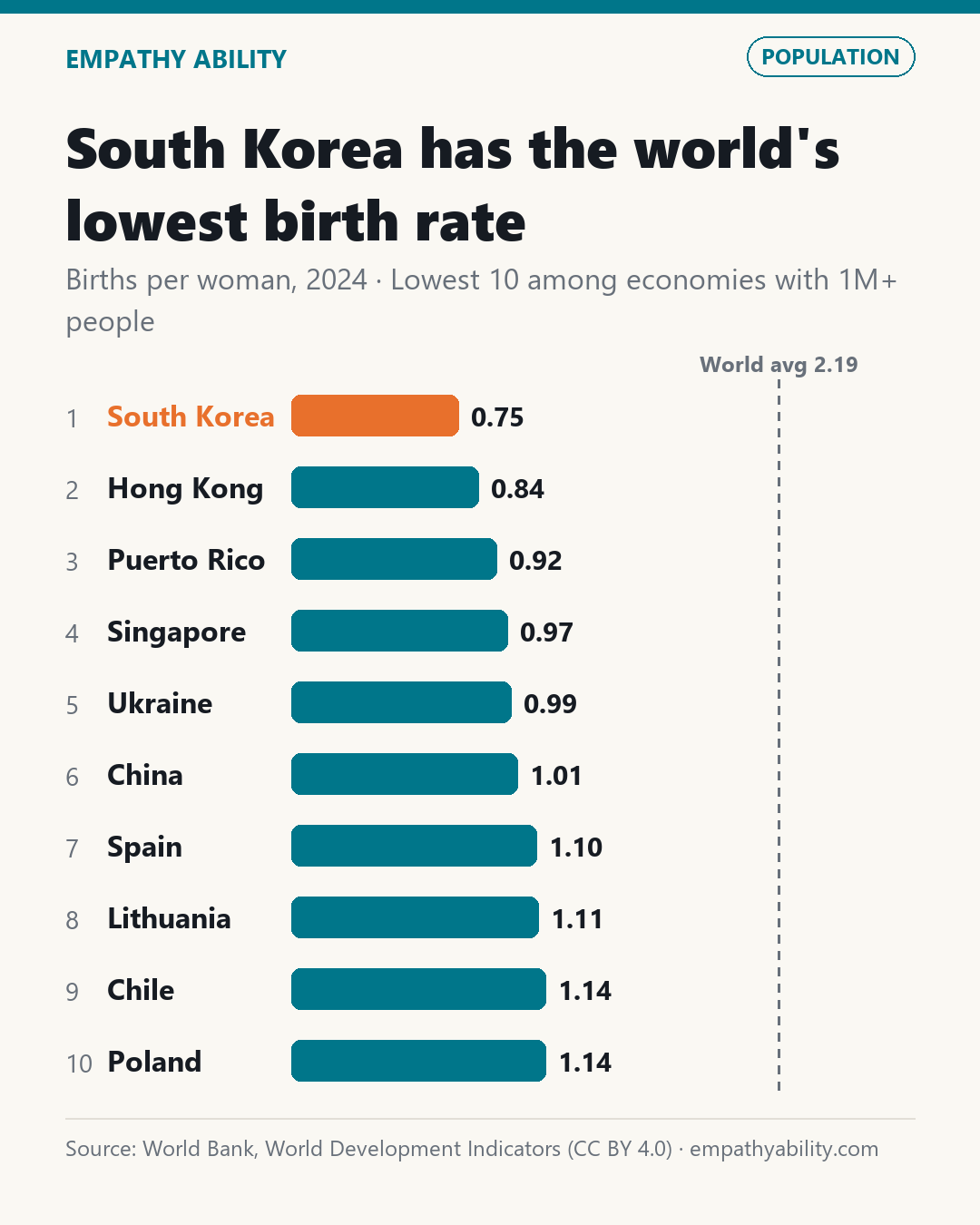 POPULATIONSouth Korea has the world's lowest birth rateSouth Korea's fertility rate fell to 0.75 births per woman in 2024, the lowest of any economy with at least one million people. Here is how it compares.
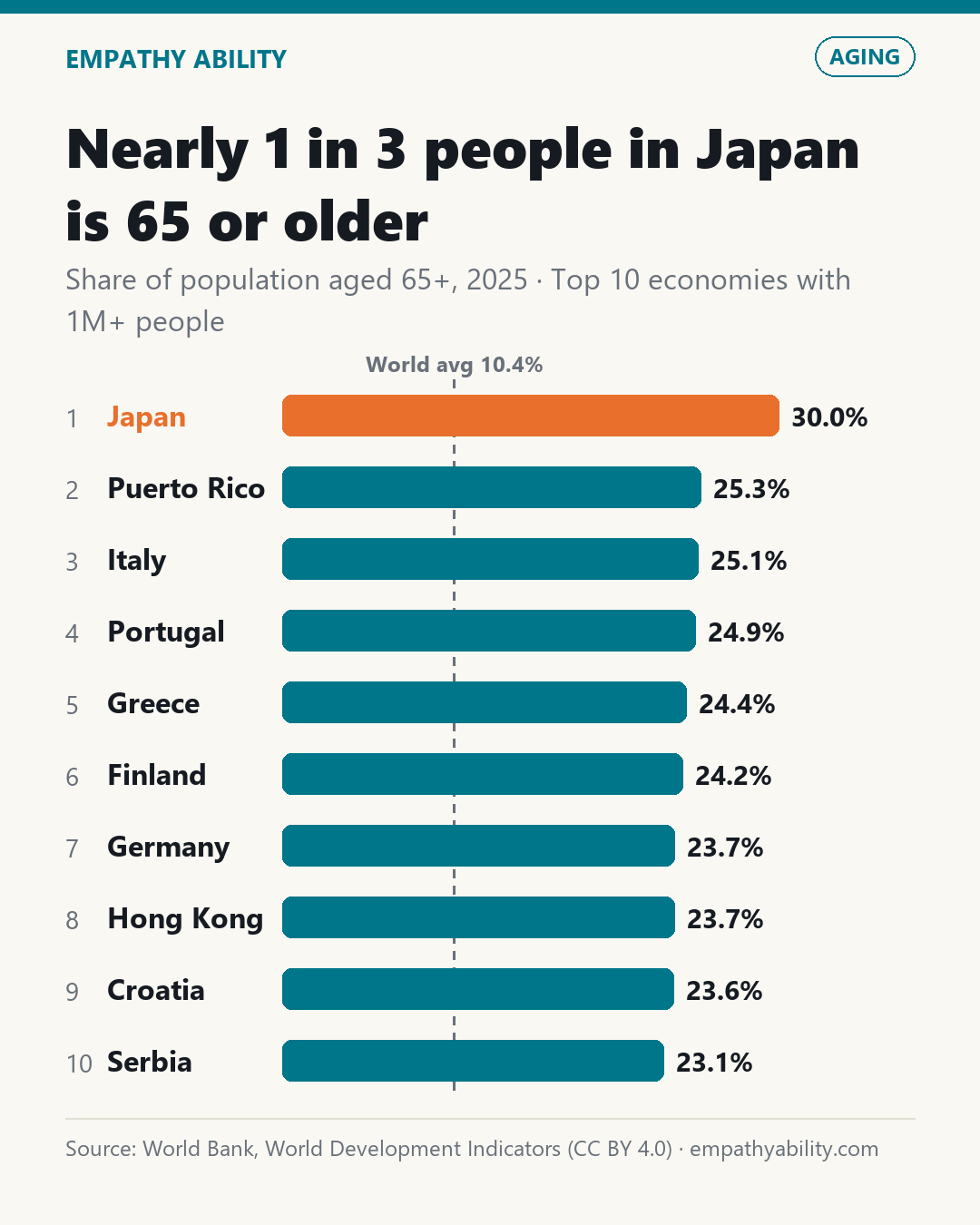 AGINGNearly 1 in 3 people in Japan is 65 or older30% of Japan's population is 65 or older, the highest share of any large economy. Southern Europe follows, and South Korea is aging faster than almost anyone.
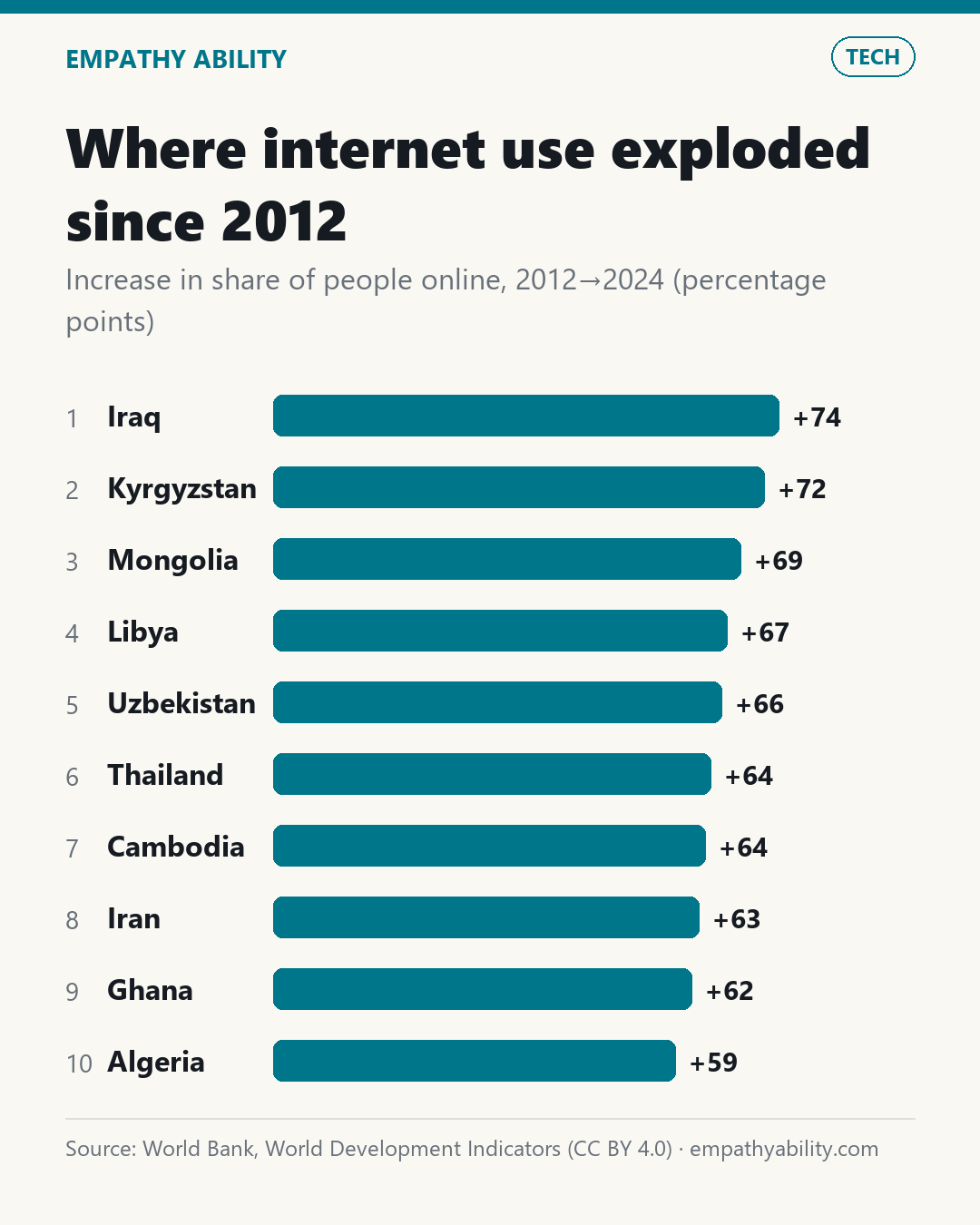 TECHWhere internet use exploded since 2012Iraq went from 7% of people online to 82% in twelve years. The biggest jumps in internet use happened far from Silicon Valley.
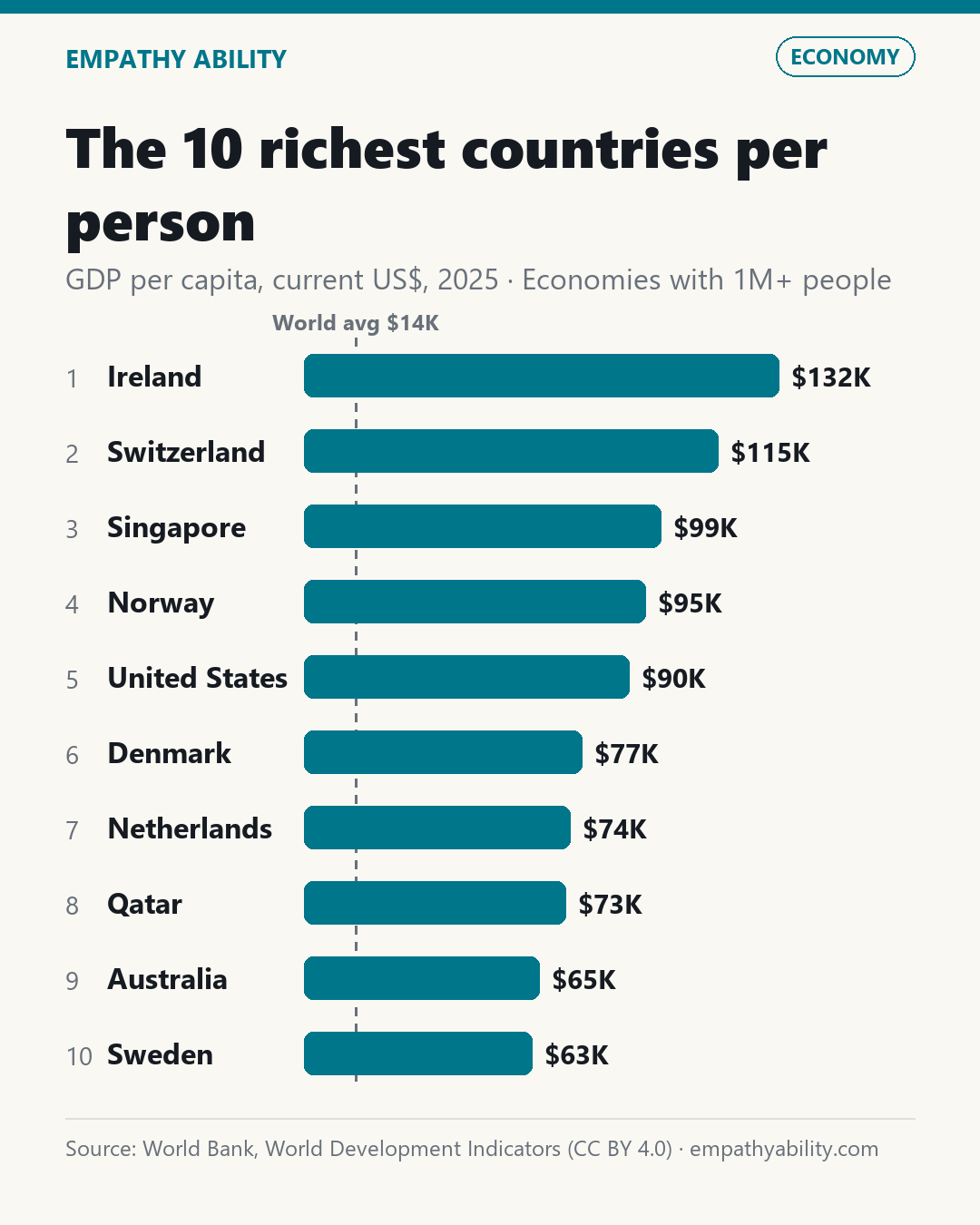 ECONOMYThe 10 richest countries per personIreland tops GDP per person at $131,592 in 2025, but that number says more about multinational profits than household income. Here is how to read the ranking.
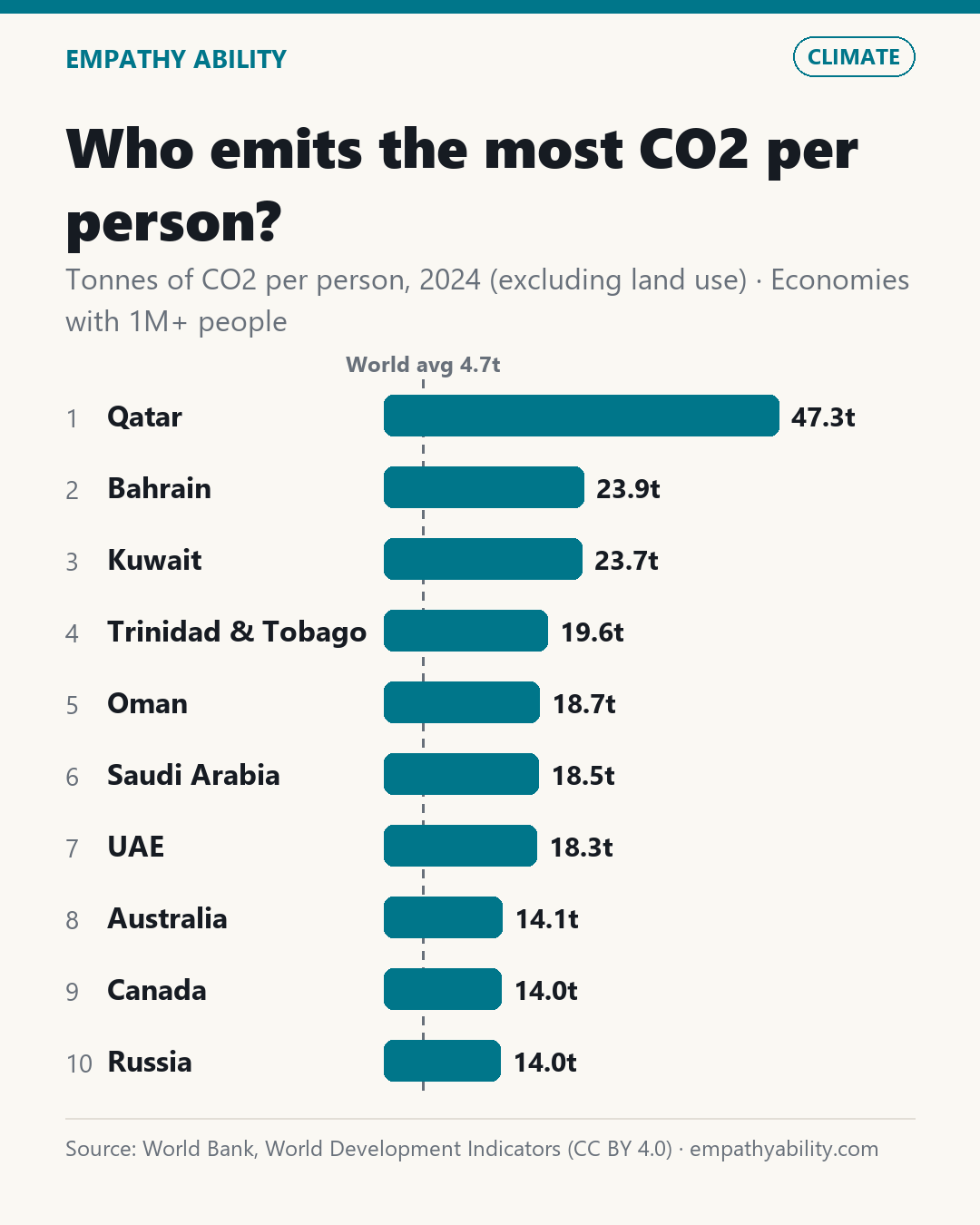 CLIMATEWho emits the most CO2 per person?The average person in Qatar is linked to 47 tonnes of CO2 a year, ten times the world average. Per-person emissions tell a very different story from national totals.
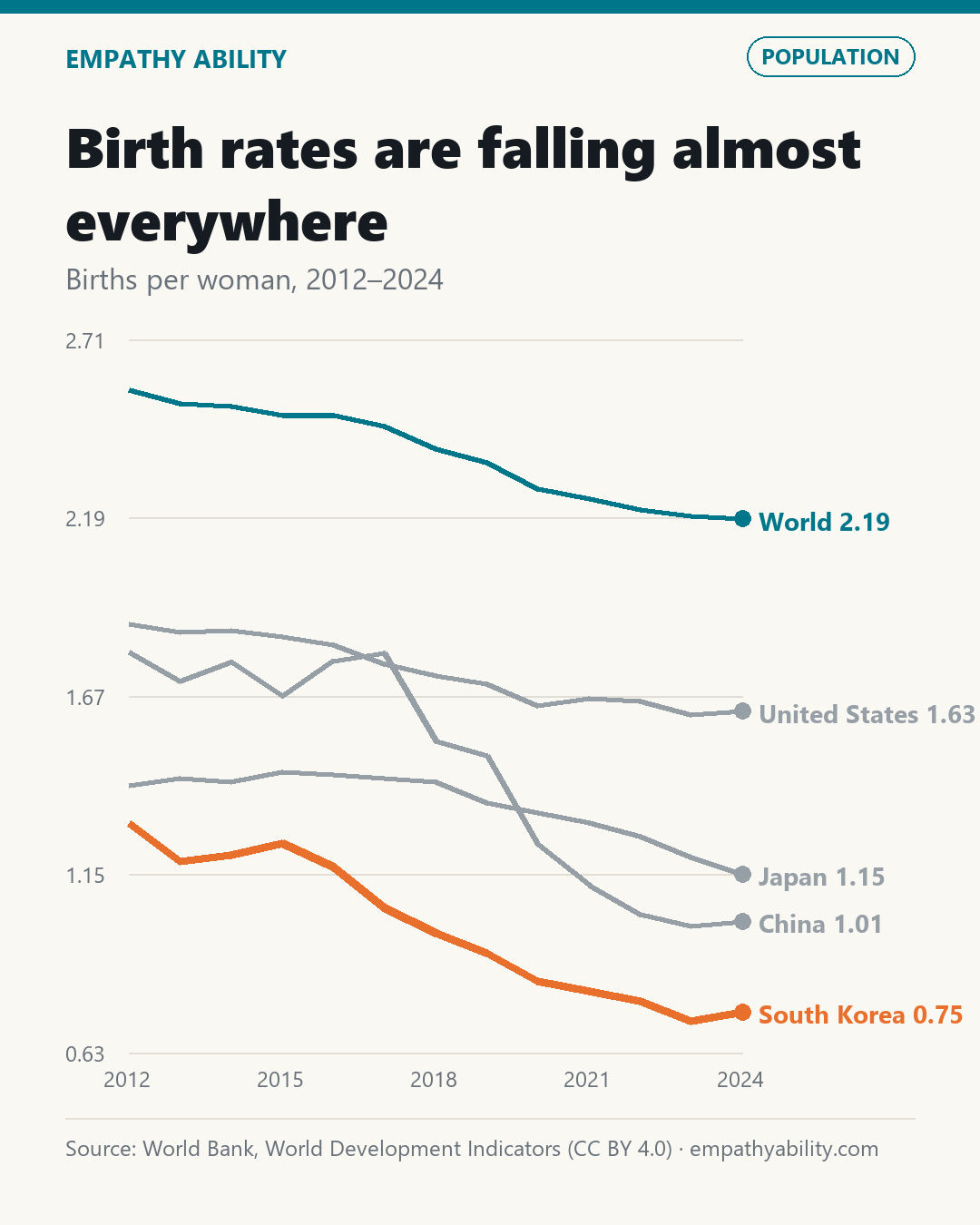 POPULATIONBirth rates are falling almost everywhereFrom 2012 to 2024 the world fertility rate fell from 2.56 to 2.19. In East Asia the drop was far steeper: China from 1.80 to 1.01, South Korea from 1.30 to 0.75.
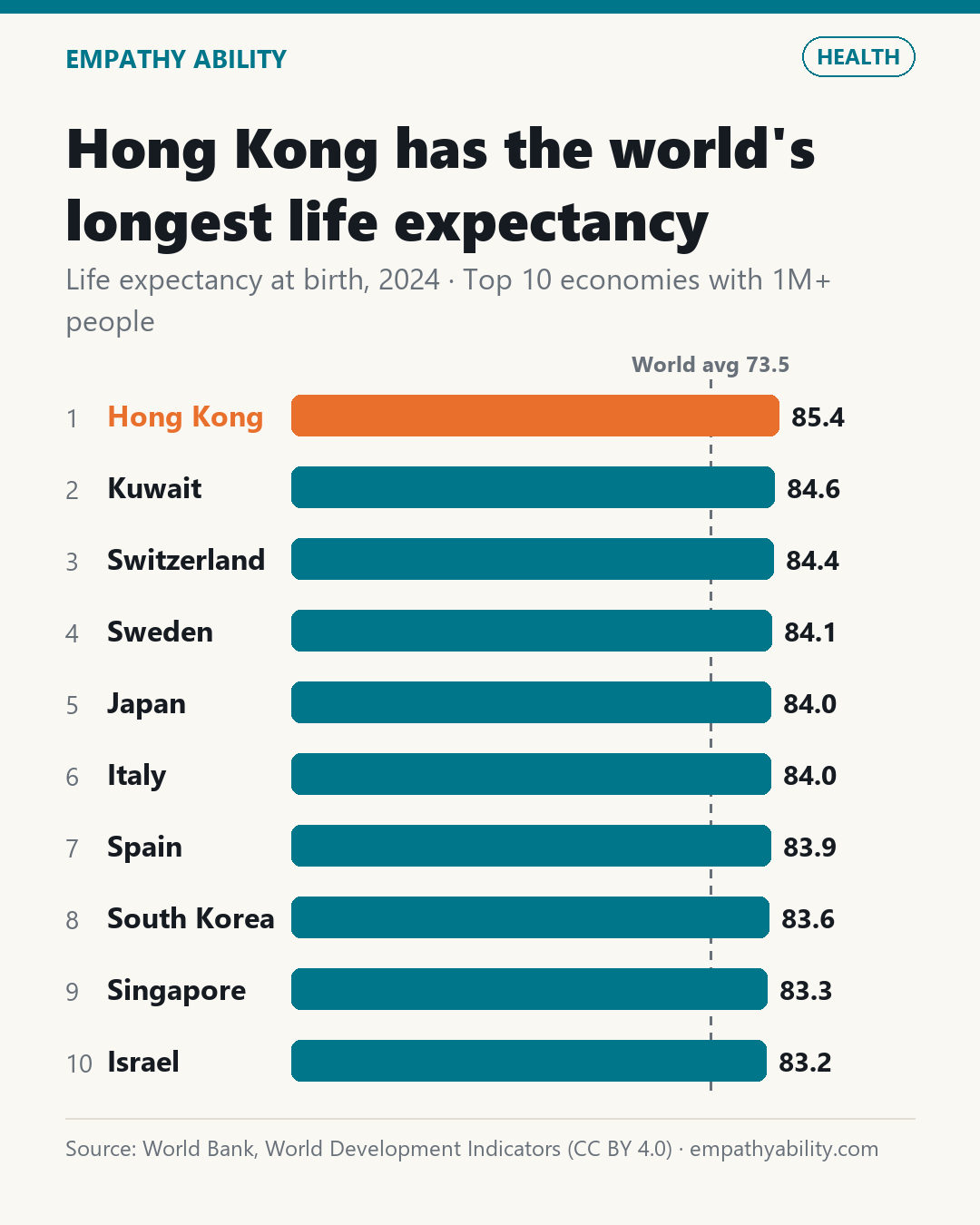 HEALTHHong Kong has the world's longest life expectancyLife expectancy at birth in Hong Kong reached 85.4 years in 2024, more than a decade above the world average. Here's how it compares.
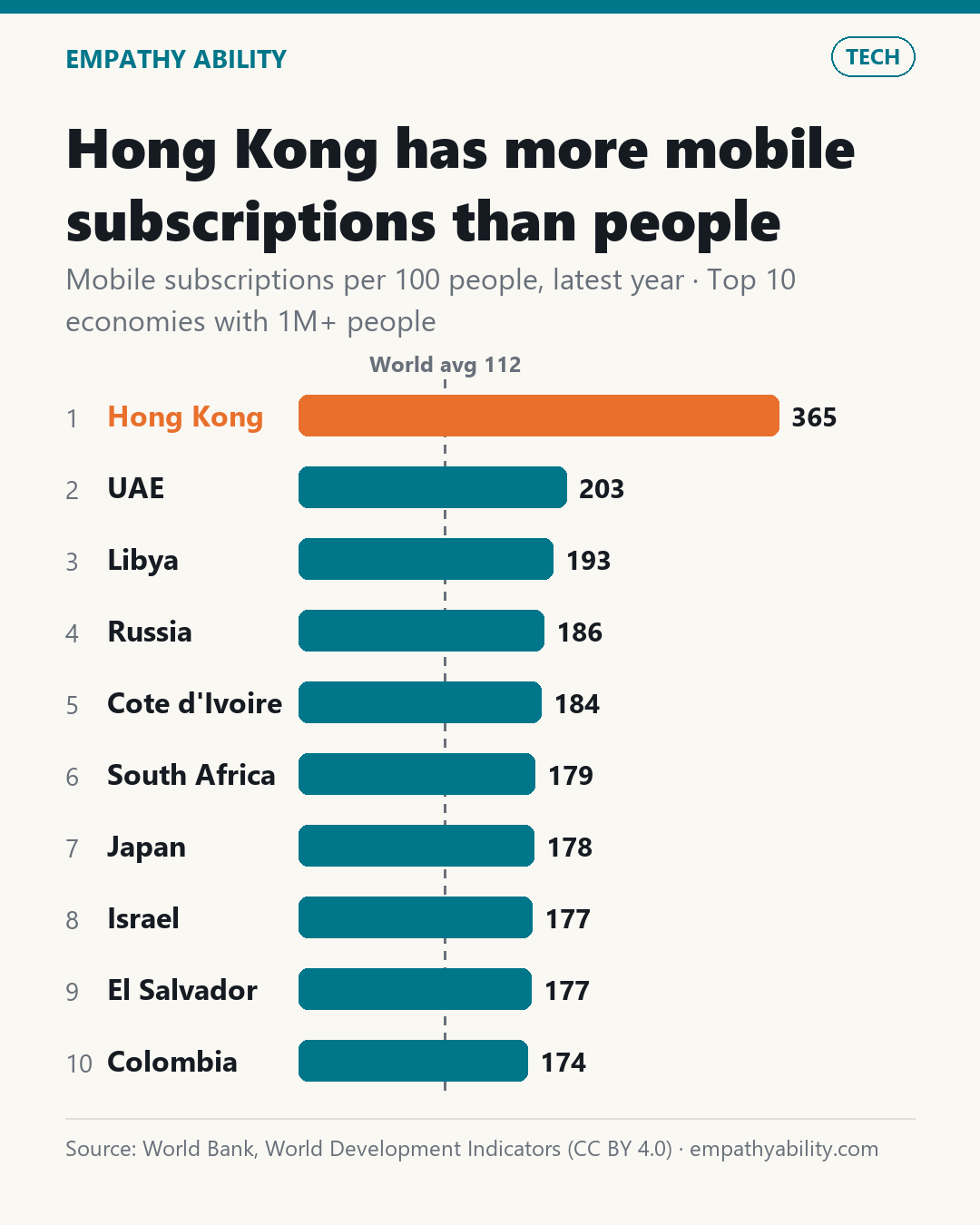 TECHHong Kong has more mobile subscriptions than peopleHong Kong reports 365 mobile subscriptions per 100 people — more than three per person. Here's why, and what the number actually measures.
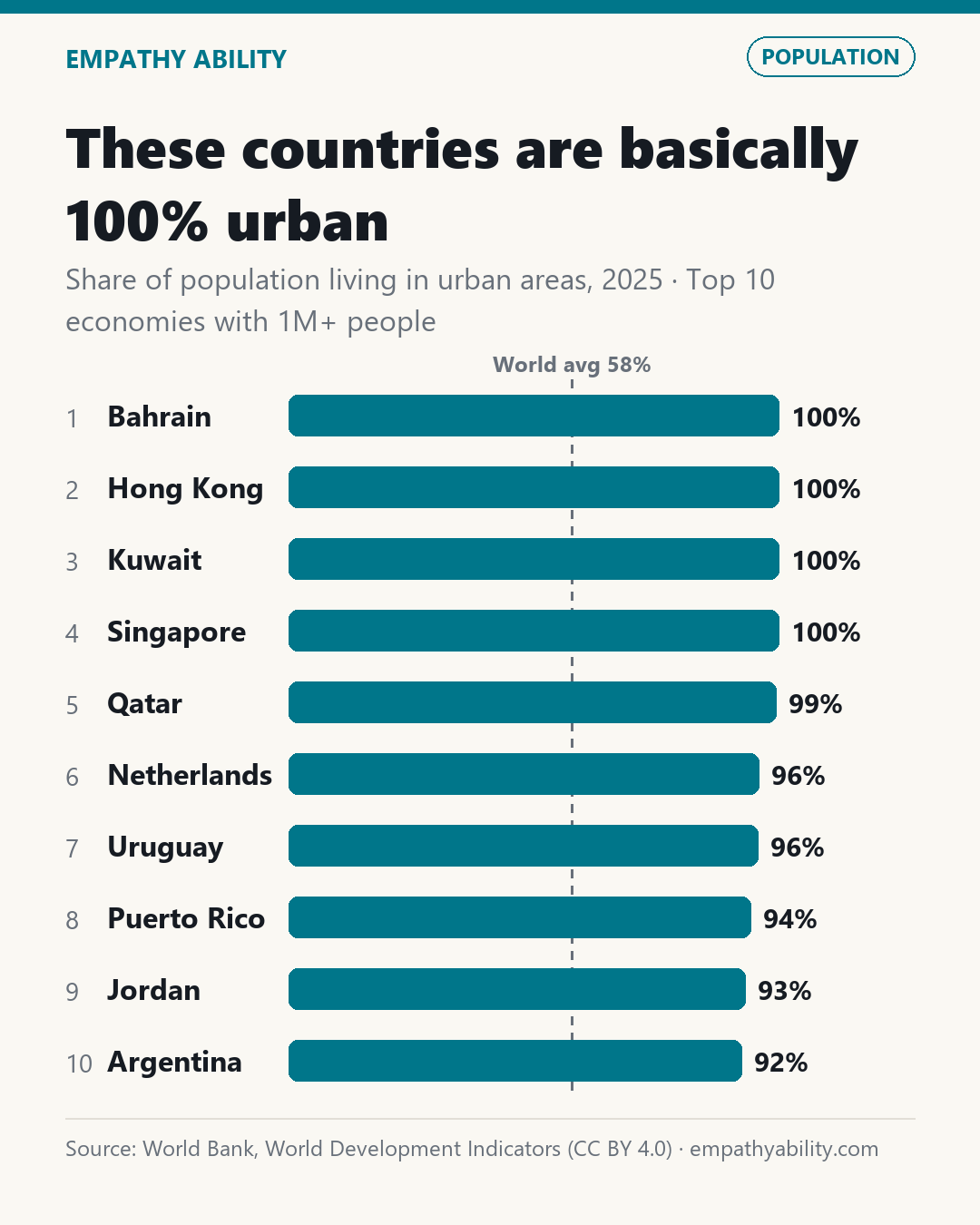 POPULATIONThese countries are basically 100% urbanBahrain, Hong Kong, Kuwait and Singapore report 100% of their population living in urban areas. Here's why — and where the least urbanized countries are.
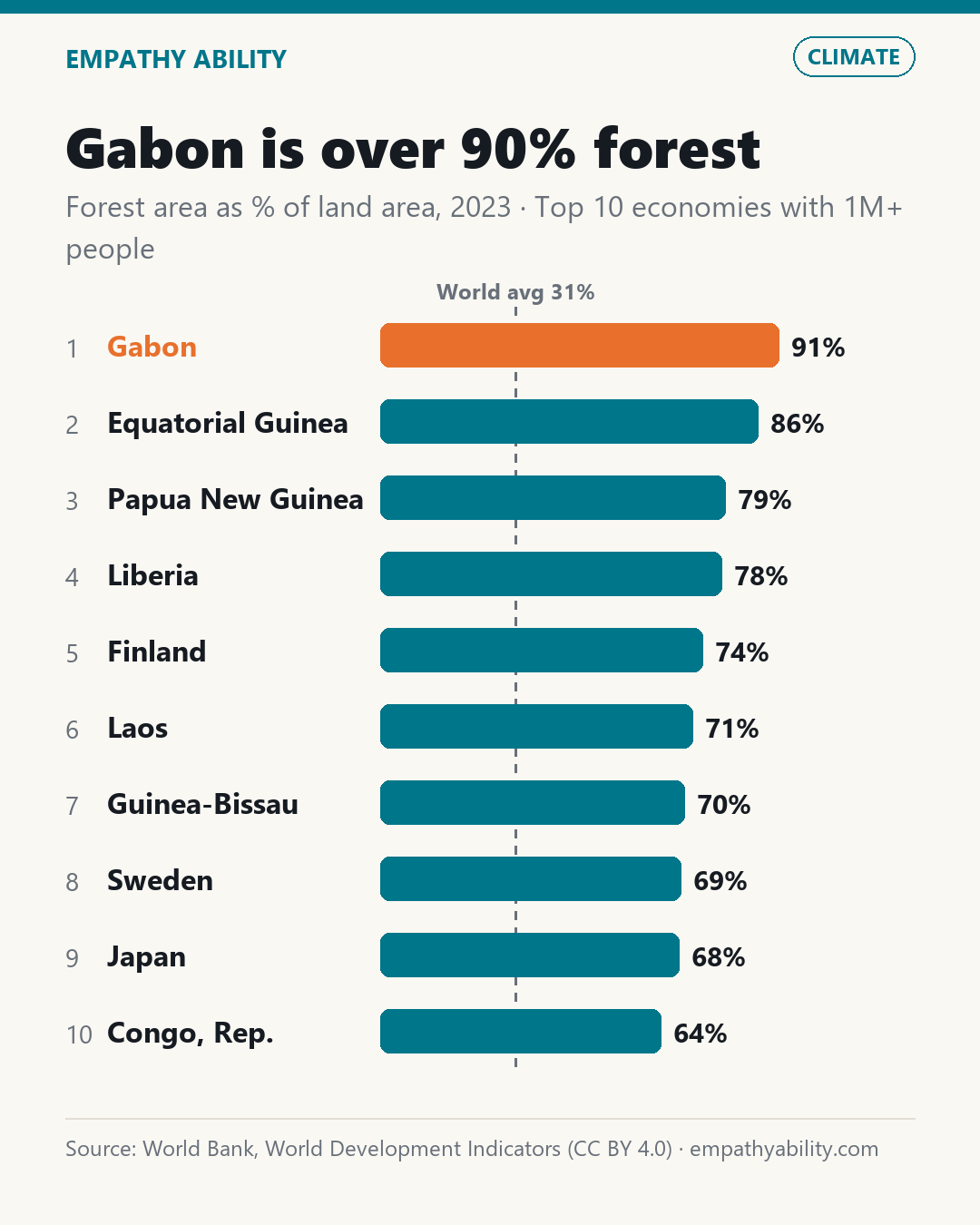 CLIMATEGabon is over 90% forest91% of Gabon's land is covered in forest, most of it Congo Basin rainforest. Here's how forest cover compares around the world.
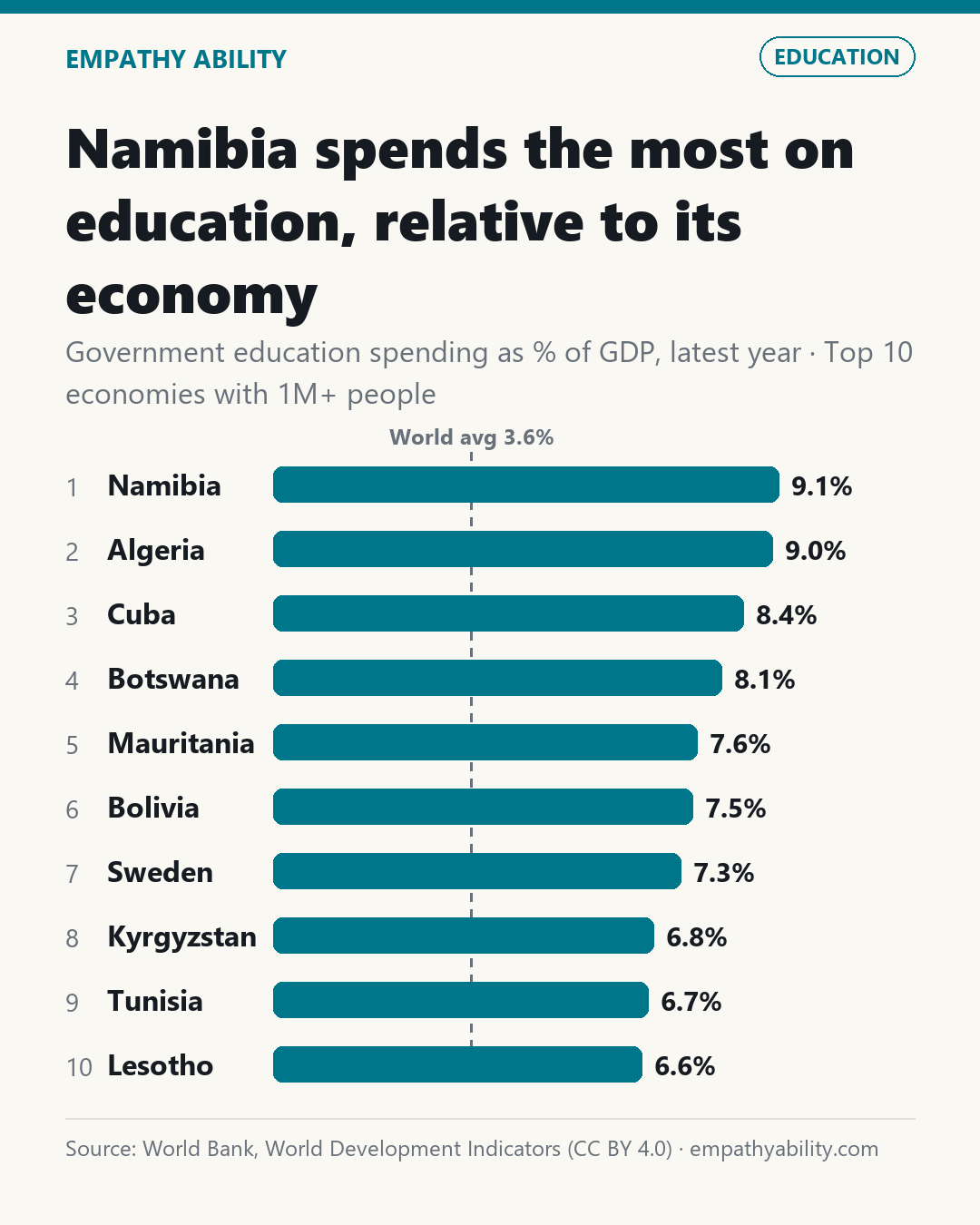 EDUCATIONNamibia spends the most on education, relative to its economyNamibia puts 9.1% of its GDP into education, the highest share in the world. Here's what that share does — and doesn't — tell us.
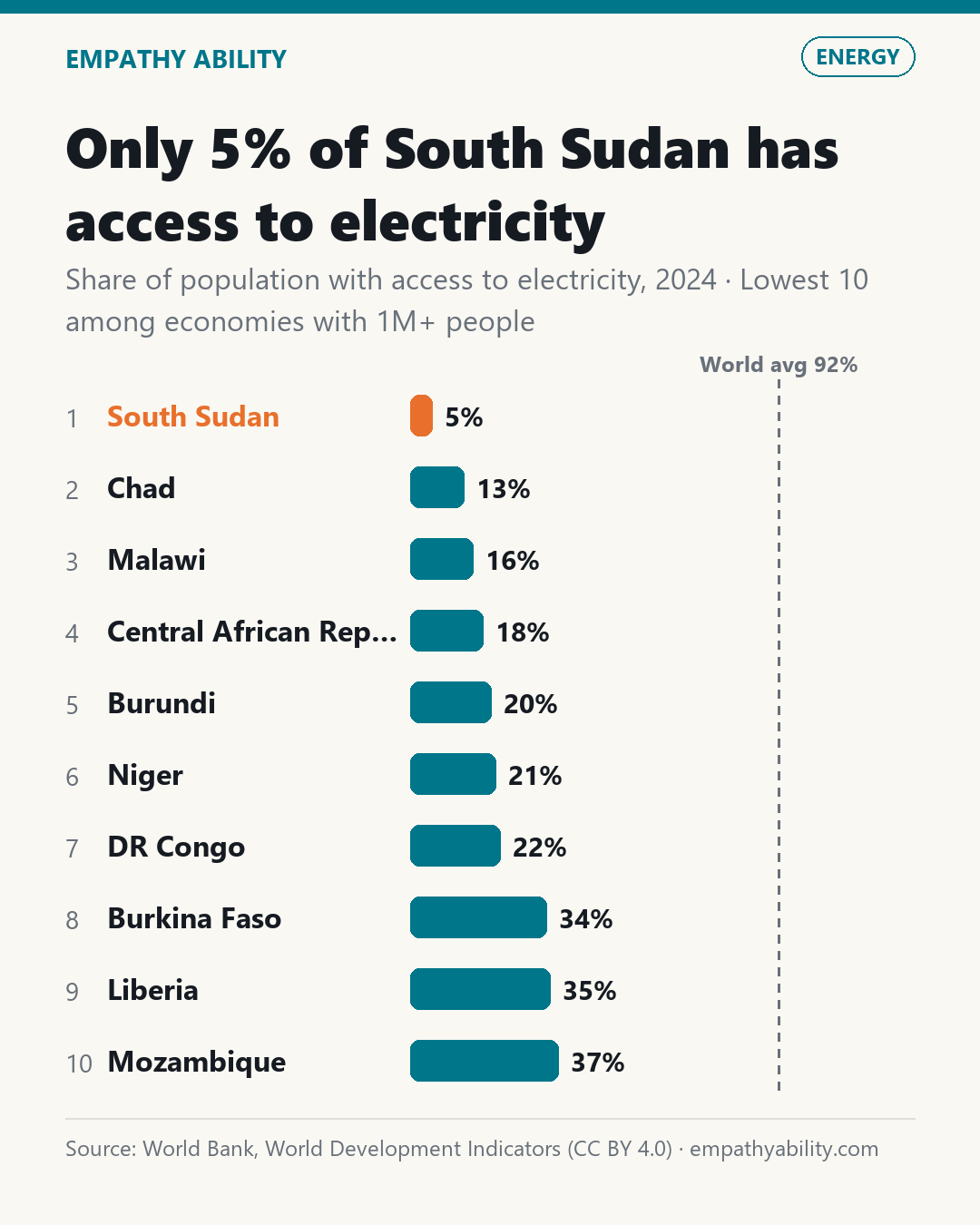 ENERGYOnly 5% of South Sudan has access to electricity5.4% of South Sudan's population has access to electricity, the lowest rate in the world. Eight of the ten lowest rates are in Sub-Saharan Africa.
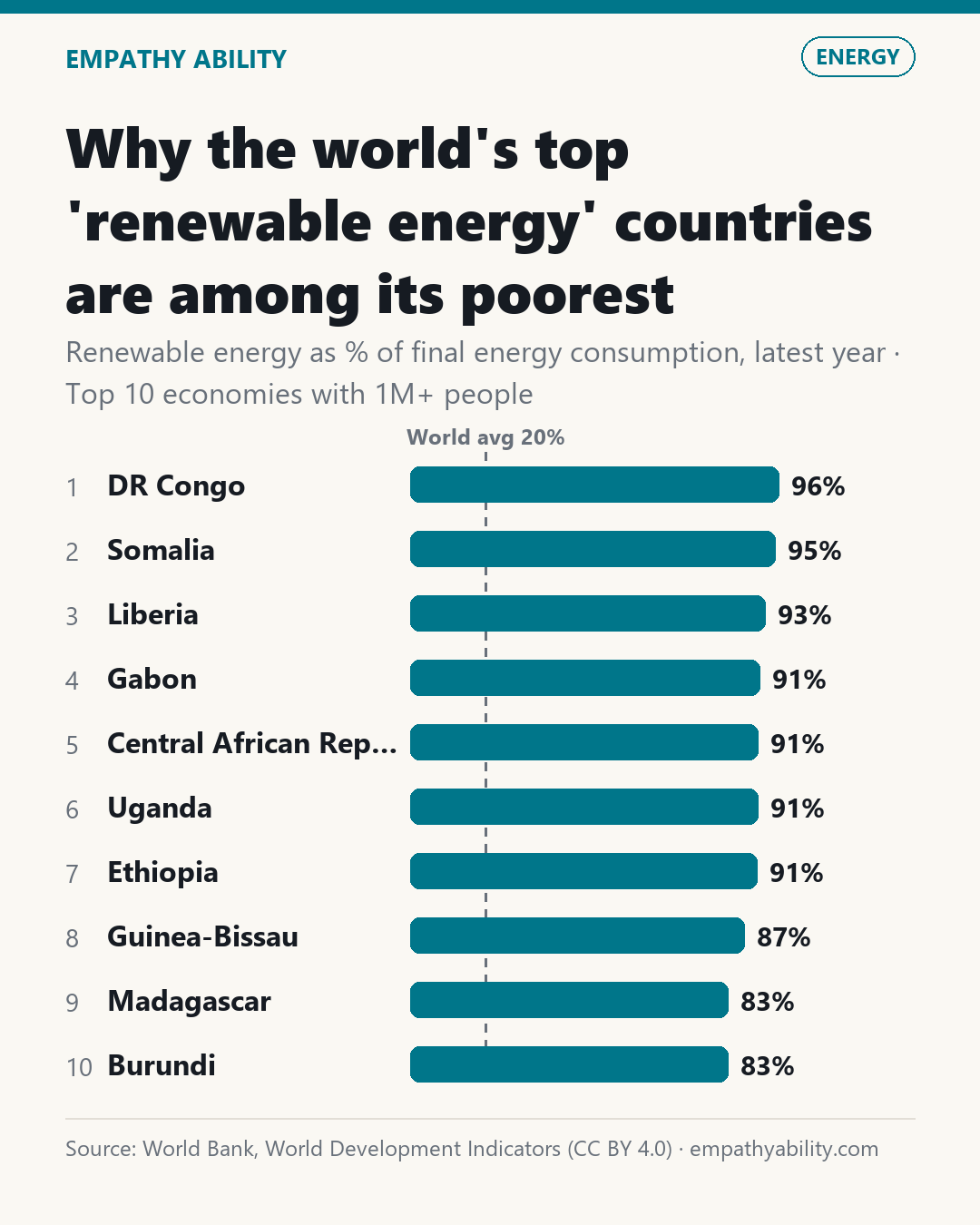 ENERGYWhy the world's top 'renewable energy' countries are among its poorestThe countries with the highest share of renewable energy in their final energy consumption are mostly among the world's poorest — because the measure counts firewood and charcoal, not just solar and wind.
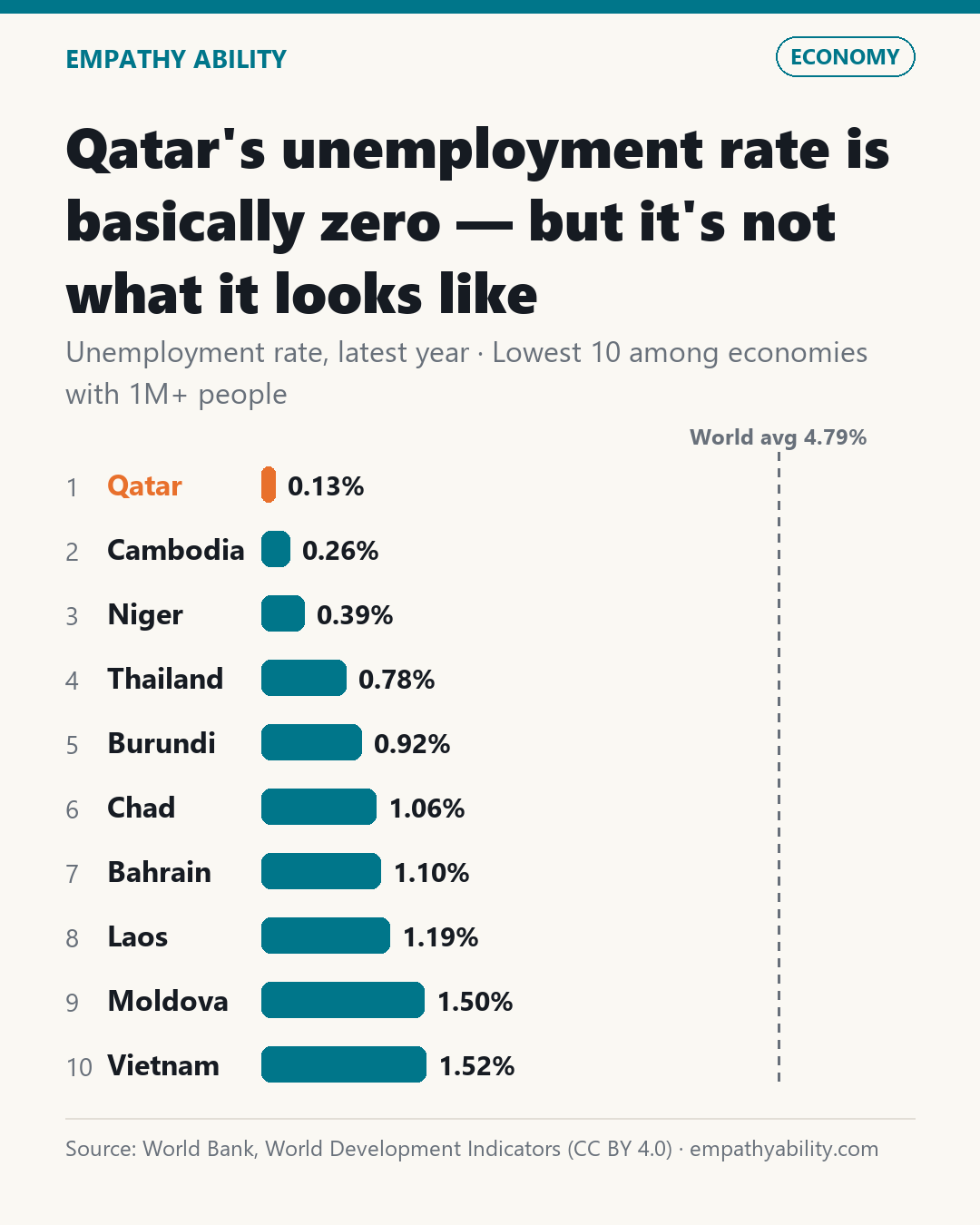 ECONOMYQatar's unemployment rate is basically zero — but it's not what it looks likeQatar reports the world's lowest unemployment rate. The reason has more to do with migrant labor rules and informal economies than a booming job market.
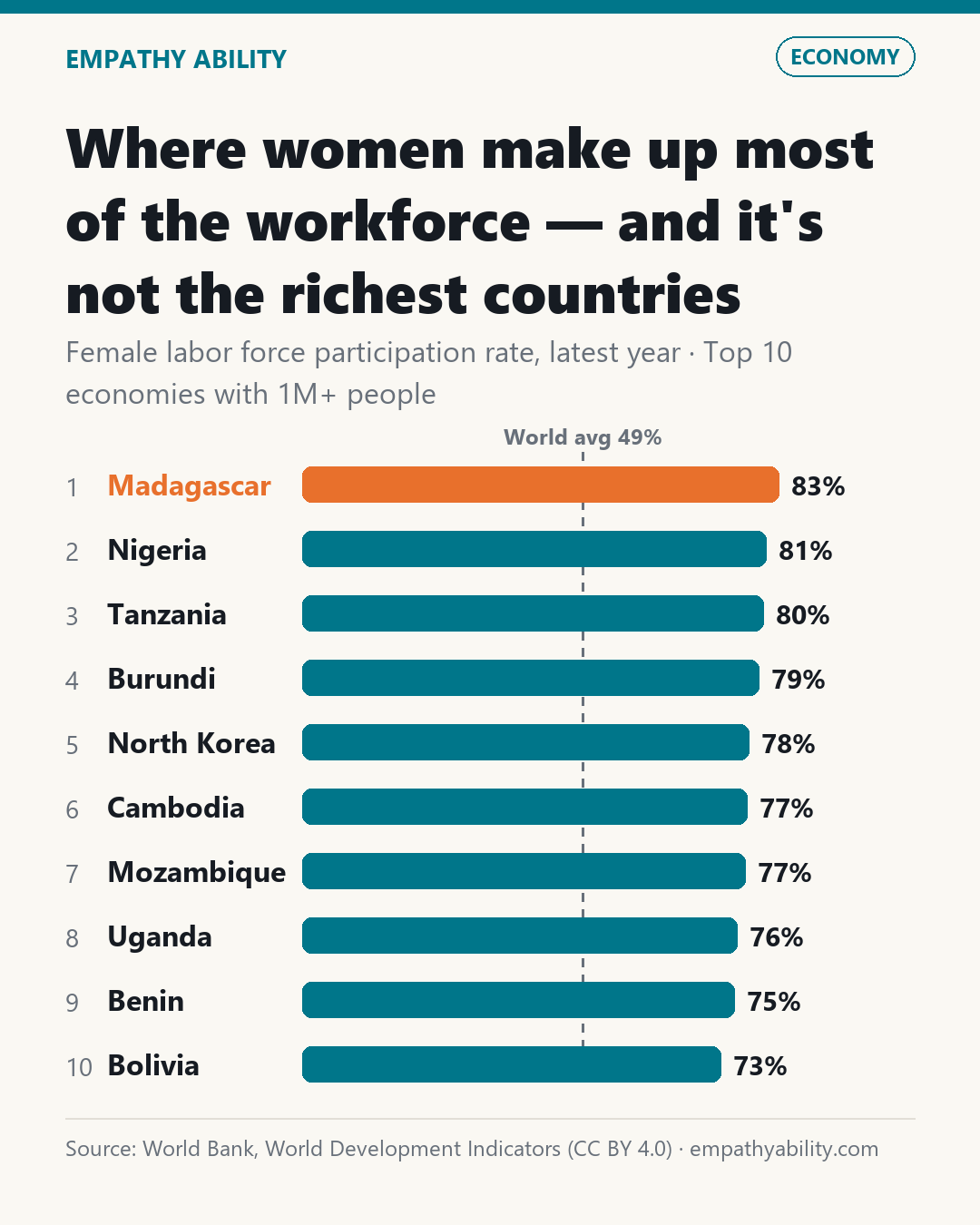 ECONOMYWhere women make up most of the workforce — and it's not the richest countriesIn Madagascar, more than 4 in 5 women are in the labor force — the highest rate in the world. The pattern shows up mostly in lower-income, agriculture-heavy economies.
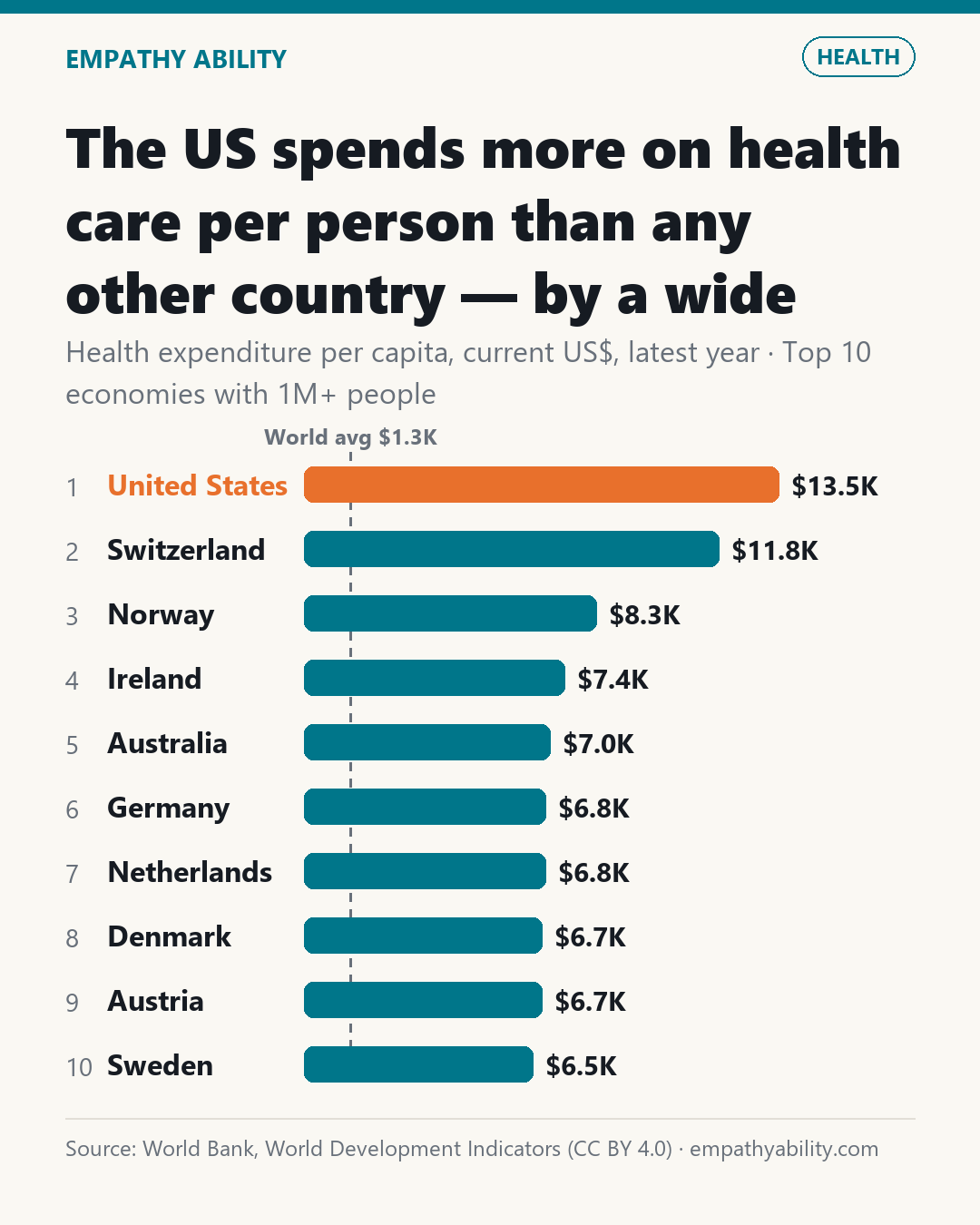 HEALTHThe US spends more on health care per person than any other country — by a wide marginThe United States spends more per person on health care each year than any other country, more than ten times the world average.